

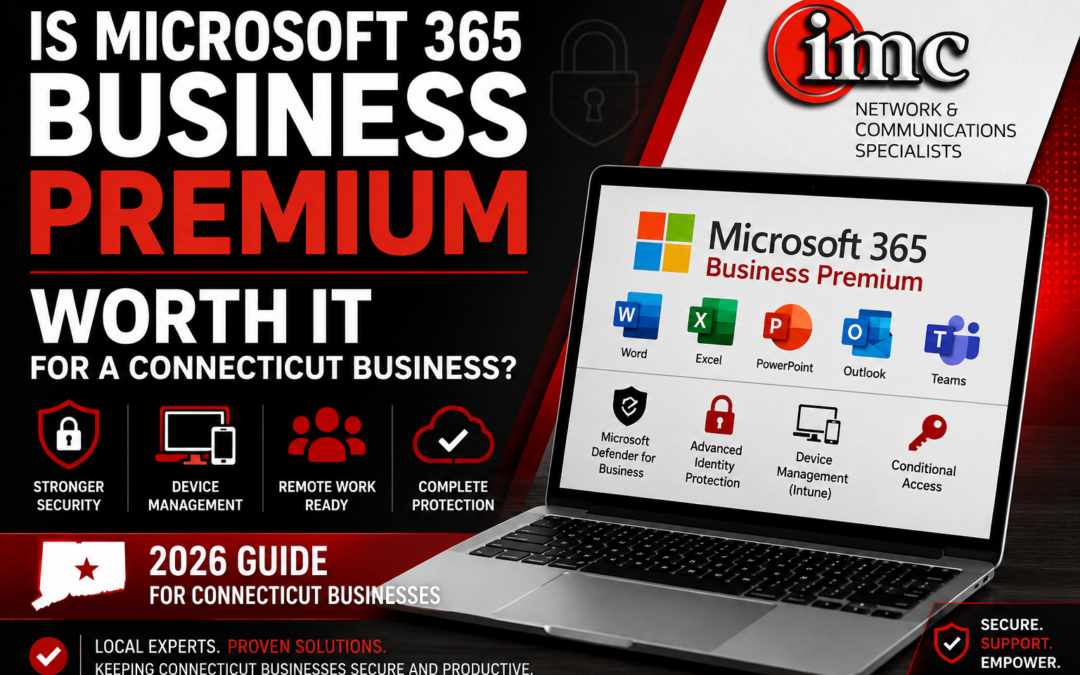
If you’re evaluating Microsoft 365 licenses for your business, you’ve probably asked one simple question:
Is Microsoft 365 Business Premium actually worth the extra cost?
For many Connecticut businesses with 20–75 employees, the answer is yes, particularly if cybersecurity, remote work, regulatory compliance, and protecting business data are priorities.
While Microsoft 365 Business Standard includes the familiar Office applications and cloud services that most businesses use every day, Microsoft 365 Business Premium adds advanced security and device management features that can significantly reduce cybersecurity risk without requiring multiple separate security products.
For many organizations, the additional investment of approximately $10 per user per month compared to Business Standard is relatively small when weighed against the potential financial impact of ransomware, business email compromise, or a data breach.
This guide explains what’s included, how Business Premium compares to other Microsoft 365 plans, and which businesses benefit the most from upgrading.
Quick Answer: Is Microsoft 365 Business Premium Worth It?
For most businesses with 20–75 employees, Microsoft 365 Business Premium is worth the investment if you:
- Store sensitive customer information
- Handle financial data
- Have remote or hybrid employees
- Need stronger cybersecurity
- Want centralized device management
- Are concerned about ransomware
- Must meet compliance requirements
If your business relies heavily on Microsoft 365 every day, Business Premium often provides one of the best cybersecurity values available for small and midsize organizations.
What Is Microsoft 365 Business Premium?
Business Premium includes everything found in Microsoft 365 Business Standard, including:
- Outlook
- Word
- Excel
- PowerPoint
- Teams
- OneDrive
- SharePoint
- Exchange Online
In addition, Business Premium includes advanced security and device management capabilities designed specifically for business environments.
Some of the most valuable additions include:
- Microsoft Defender for Business
- Microsoft Intune
- Microsoft Entra ID (formerly Azure Active Directory) Premium
- Conditional Access
- Device compliance policies
- Mobile device management
- Advanced ransomware protection
These tools help businesses better protect users, devices, and company data.
Business Standard vs Business Premium
Many businesses compare these two plans before making a decision.
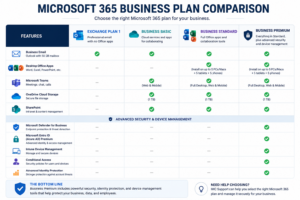
| Feature | Business Standard | Business Premium |
|---|---|---|
| Desktop Office Apps | ✔ | ✔ |
| Teams | ✔ | ✔ |
| Exchange Email | ✔ | ✔ |
| OneDrive | ✔ | ✔ |
| SharePoint | ✔ | ✔ |
| Microsoft Defender for Business | ✘ | ✔ |
| Intune Device Management | ✘ | ✔ |
| Conditional Access | ✘ | ✔ |
| Advanced Identity Protection | ✘ | ✔ |
| Device Compliance Policies | ✘ | ✔ |
For businesses concerned about cybersecurity, the additional security features often justify the higher monthly cost.
Why Business Premium Has Become So Popular
Cybersecurity threats have changed dramatically over the last several years.
Many attacks no longer target servers—they target users.
Common attacks include:
- Phishing emails
- Stolen passwords
- Business email compromise
- Ransomware
- Fake Microsoft login pages
- Credential theft
Business Premium helps reduce these risks through multiple layers of protection rather than relying solely on antivirus software.
Five Reasons Connecticut Businesses Upgrade to Business Premium
1. Stronger Email Security
Email remains one of the most common attack methods used by cybercriminals.
Business Premium helps detect malicious activity before users become victims.
2. Better Protection Against Ransomware
Microsoft Defender for Business continuously monitors devices for suspicious activity and helps detect ransomware before it spreads throughout the organization.
3. Secure Remote Work
Whether employees work from home, travel frequently, or use company laptops outside the office, Business Premium provides centralized security policies that help keep devices protected.
4. Easier Device Management
Through Microsoft Intune, businesses can:
- Enforce encryption
- Require screen locks
- Deploy security policies
- Remove company data from lost devices
- Manage Windows updates
This becomes especially valuable as organizations grow.
5. Better Compliance
Healthcare practices, law firms, manufacturers, and other regulated organizations often require stronger security controls than Business Standard provides.
Business Premium offers tools that can help support broader security and compliance strategies.
Is Business Premium Enough by Itself?
No.
Business Premium is an excellent security foundation—but it should not be viewed as a complete cybersecurity solution.
Most businesses should also consider:
- Endpoint Detection and Response (EDR)
- Managed Detection and Response (MDR)
- Security awareness training
- Email backup
- Password management
- Backup and disaster recovery
- Security monitoring
- Incident response planning
Cybersecurity works best when multiple layers of protection work together.
How IMC Support Helps Businesses Get More From Microsoft 365
At IMC Support, Microsoft 365 is more than just licensing.
Our team helps businesses deploy, secure, and manage their Microsoft 365 environment while integrating it into a broader managed IT and cybersecurity strategy.
Our Microsoft 365 services include:
- User onboarding and offboarding
- Exchange Online administration
- Teams management
- SharePoint administration
- Security policy configuration
- Multi-factor authentication deployment
- SPF, DKIM, and DMARC configuration
- Microsoft 365 email backup
- License management
- Ongoing administration and support
For organizations requiring additional protection, Microsoft 365 can also be integrated with services such as endpoint detection, SIEM monitoring, Security Operations Center (SOC) monitoring, ThreatLocker application control, and security awareness training.
Who Should Upgrade to Business Premium?
Business Premium is an excellent choice for:
- Healthcare organizations
- Law firms
- Manufacturing companies
- Construction businesses
- Professional service firms
- Financial organizations
- Businesses with remote employees
- Companies storing confidential client information
Organizations relying heavily on Microsoft 365 generally receive the greatest value from the additional security capabilities.
Frequently Asked Questions
Is Microsoft 365 Business Premium worth the extra cost?
For many businesses, yes. The additional security, device management, and identity protection features often provide significantly more value than the additional monthly licensing cost.
Can Business Premium prevent ransomware?
No software can guarantee complete protection. However, Business Premium provides several security features that help reduce risk and improve detection.
Does Business Premium include Microsoft Office?
Yes. Business Premium includes the full desktop versions of Outlook, Word, Excel, PowerPoint, and other Microsoft Office applications.
Is Business Premium better than Business Standard?
For organizations that prioritize cybersecurity and centralized device management, Business Premium offers substantially more security functionality.
Should a Managed Service Provider manage Microsoft 365?
Many businesses choose to have an MSP manage Microsoft 365 to help ensure security settings, licensing, user accounts, backups, and compliance features are configured correctly and maintained over time.
Final Thoughts
Microsoft 365 Business Premium has become one of the most valuable technology investments available to small and midsize businesses.
For organizations with 20–75 employees, the combination of productivity tools, identity protection, endpoint security, and centralized device management often makes Business Premium well worth the additional monthly investment.
However, licensing is only one part of a secure Microsoft 365 environment. Proper configuration, ongoing administration, security monitoring, user training, and backup planning all play an important role in protecting business data.
Businesses evaluating Microsoft 365 should consider not only the cost of the license, but also how it fits into their overall cybersecurity and business continuity strategy.
Related Resources
- How Much Does Managed IT Support Cost for a 20–75 Employee Business in Connecticut?
- Internal IT vs Managed IT Services: Which Is Better for a 20–75 Employee Business in Connecticut?
- What Happens During a Cybersecurity Incident? A Connecticut Business Owner’s Guide
- How Do You Switch IT Providers Without Downtime? A Connecticut Business Owner’s Guide
- Best Managed IT Services for Healthcare Practices in Connecticut